If you are deciding whether to sit Security+ now or wait for the next version, CompTIA has already answered the timing question. The current exam, SY0-701, has a published English retirement date of June 11, 2027, which means the version printed on every study guide you buy this year is still the one you will sit.
The version window: launched November 2023, retires June 2027
SY0-701 went live on November 7, 2023 and is listed by CompTIA as Security+ V7. On the official certification page, CompTIA publishes retirement dates of June 11, 2027 for the English exam and August 13, 2027 for the Japanese, Portuguese, Spanish, and Thai versions. That is an unusually long runway for a CompTIA exam, and it settles the question that comes up in every forum thread: nothing you study for SY0-701 this year expires before you can sit it.
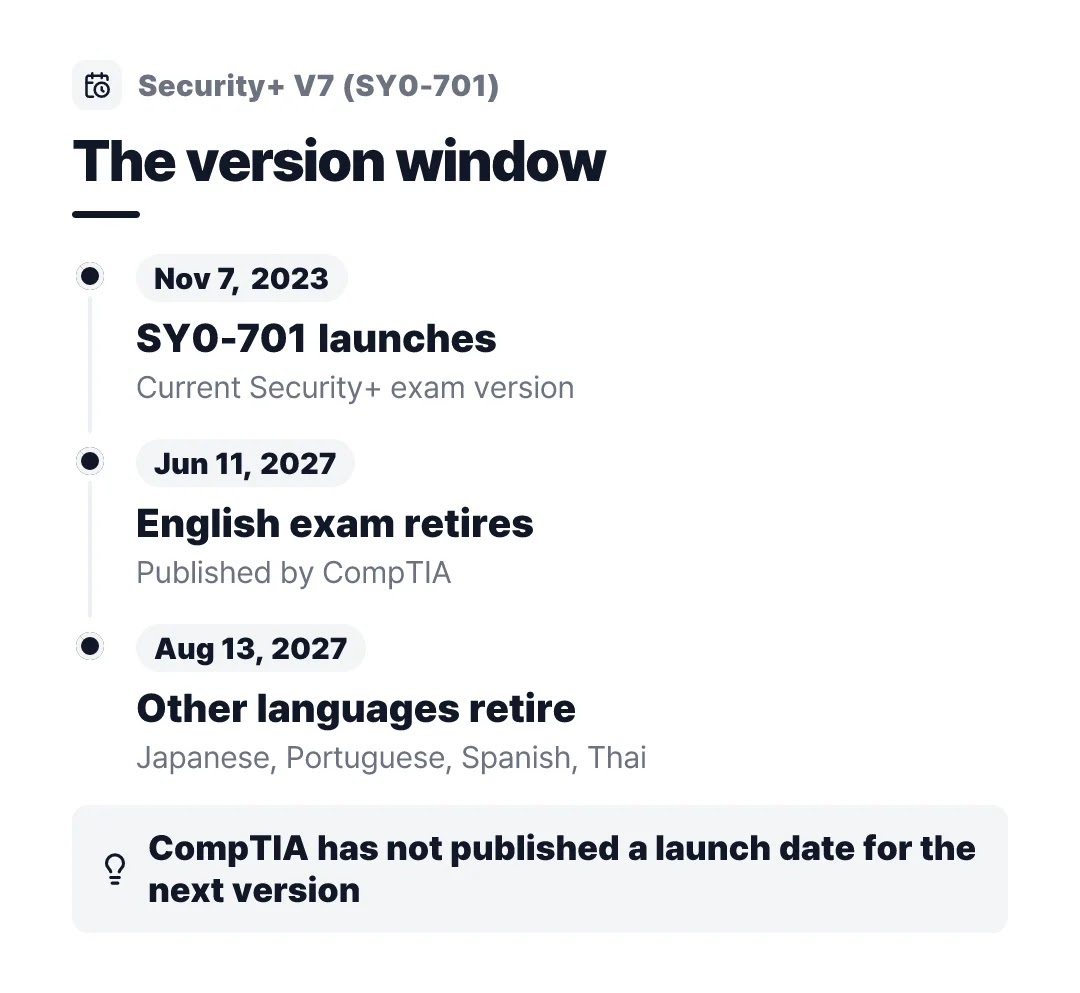
A successor is expected. Training providers have pointed to a V8 release in late 2026 based on communications through the CompTIA Instructors Network, but CompTIA has not published a launch date for the next Security+ version as of this writing. Treat any specific 801 launch date you see as unconfirmed until it appears on comptia.org.
The practical consequence is simpler than the speculation. CompTIA typically runs the old and new versions in parallel for a period before retiring the older one, and your certification is valid for three years from your test date regardless of which version you sat. Someone who passes SY0-701 in 2026 holds a credential that runs into 2029, well past the point where 701 itself is gone.
What the exam actually looks like on test day
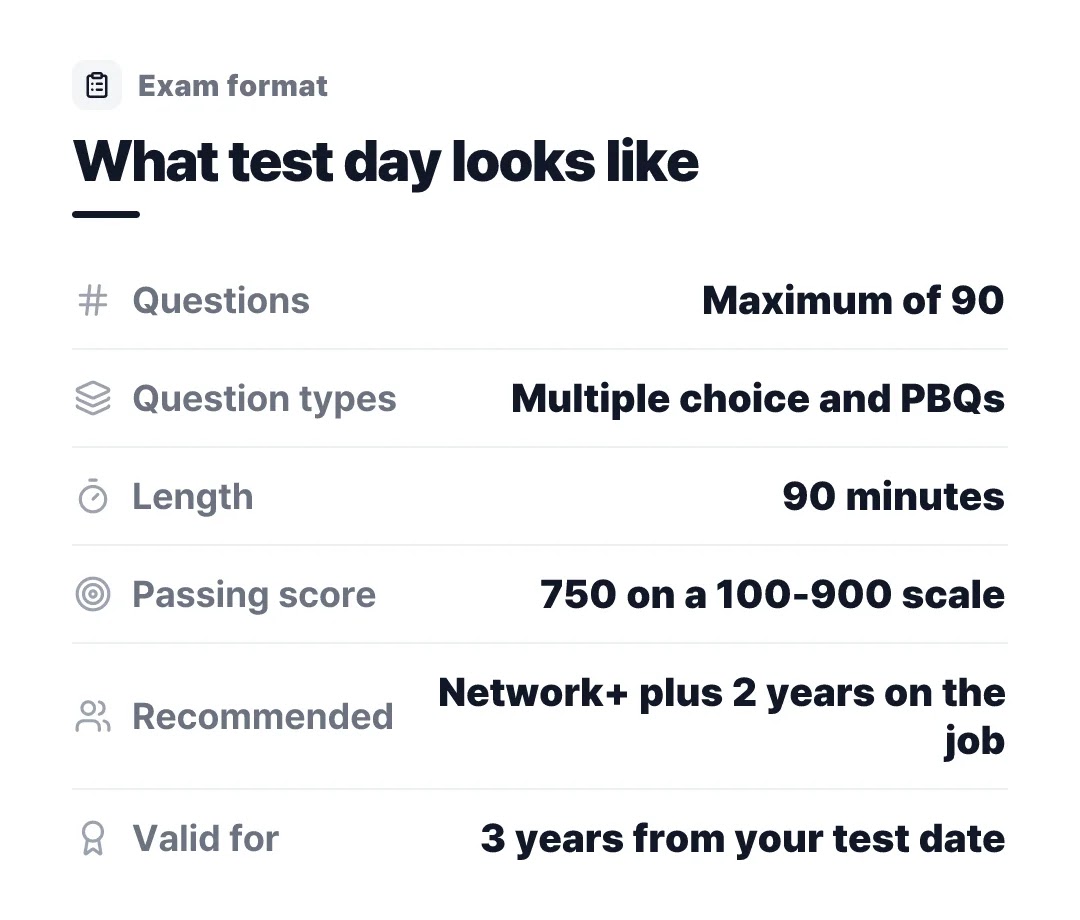
The exam runs 90 minutes with a maximum of 90 questions, mixing multiple choice with performance-based questions. The passing score is 750 on a scale that runs from 100 to 900, which is not a percentage and does not convert cleanly to one. CompTIA recommends Network+ plus two years in a security or systems administration role, though that is guidance rather than an enforced prerequisite.
Performance-based questions are where the clock pressure shows up. They ask you to configure something, read a log, or place controls in a diagram rather than recognize a term, and they tend to sit at the front of the exam. Most experienced candidates flag them, work the multiple choice first, and come back with whatever time is left.
CompTIA does not publish pass rates for Security+, so any specific figure you see quoted is an estimate from forum polls rather than a measured statistic. Plan against the blueprint weights instead, which CompTIA does publish.
Turning the five domain weights into a calendar
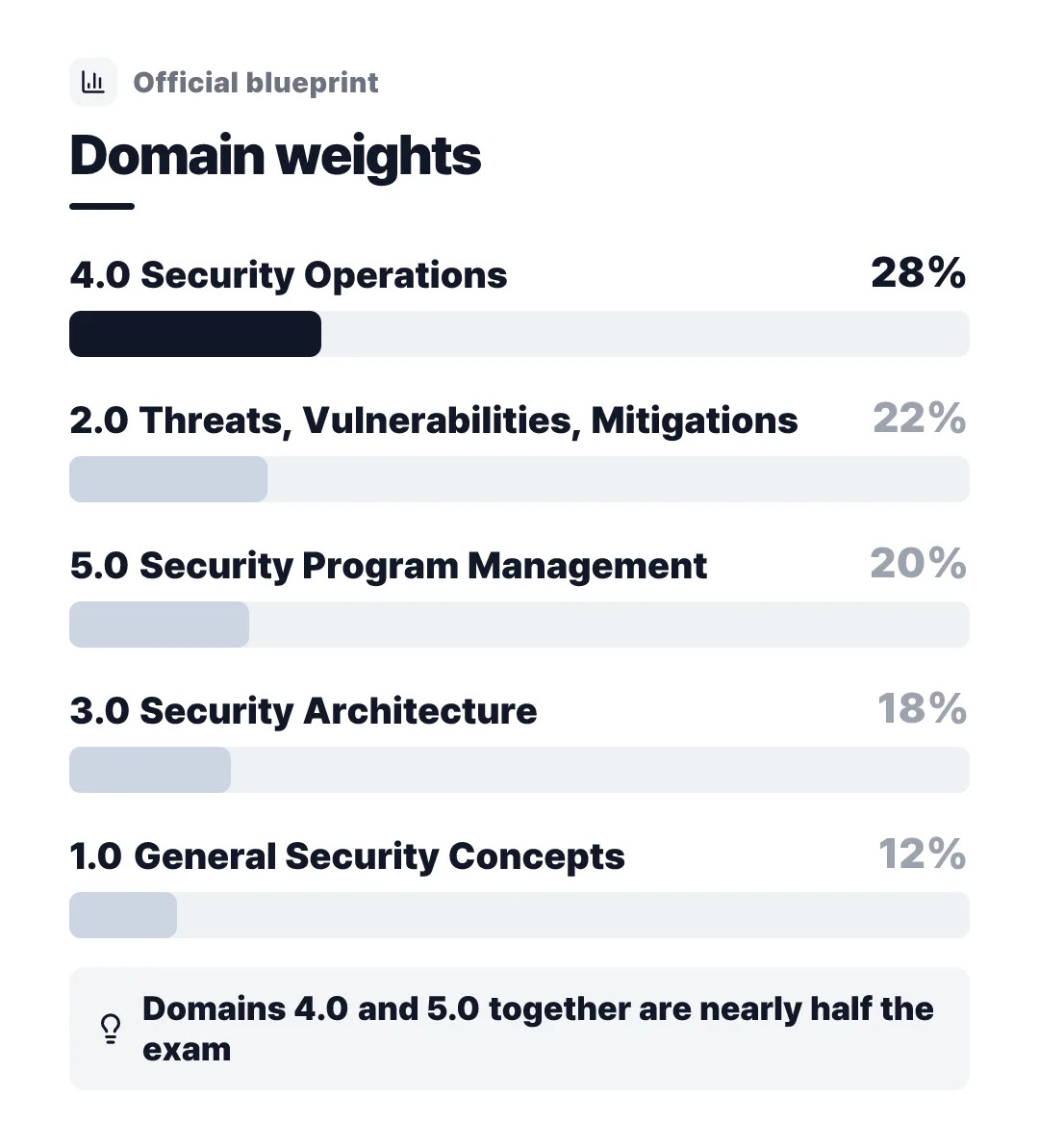
The five domains are not equally weighted, and the gap between the largest and smallest is more than two to one. Translating those percentages into minutes and study hours makes the imbalance concrete.
| Domain | Weight | Share of the 90-minute clock | Hours in a 60-hour plan |
|---|---|---|---|
| 1.0 General Security Concepts | 12% | ~11 min | 7.2 |
| 2.0 Threats, Vulnerabilities, and Mitigations | 22% | ~20 min | 13.2 |
| 3.0 Security Architecture | 18% | ~16 min | 10.8 |
| 4.0 Security Operations | 28% | ~25 min | 16.8 |
| 5.0 Security Program Management and Oversight | 20% | ~18 min | 12.0 |
Weights and the 90-minute exam length come from CompTIA's official Security+ page; the two right-hand columns apply those weights to the clock and to a 60-hour study budget.
Security Operations at 28% is the single largest block, and it is also the domain where performance-based questions cluster, since it covers monitoring, incident response, and hardening — the tasks that lend themselves to a simulation. General Security Concepts at 12% is the smallest, but it is the vocabulary layer the other four domains are written in, so front-loading it costs little and pays off across the rest.
The domain most often underestimated is 5.0, Security Program Management and Oversight, at a full fifth of the exam. It is governance, risk, third-party assessment, and compliance reporting — material that reads as dry policy text and gets pushed to the end of study plans. At 20% it carries more weight than Security Architecture, and it is almost entirely memorization, which makes it the cheapest points on the exam per hour invested.
What failing costs, and what renewal costs
The full price picture matters more here than on most exams, because there is no retake discount. CompTIA raised exam prices across its lineup in June 2026, and the Security+ voucher is now listed at $439 direct from CompTIA, up from $425. Training partners resell official vouchers below retail, so check those before buying at list price.
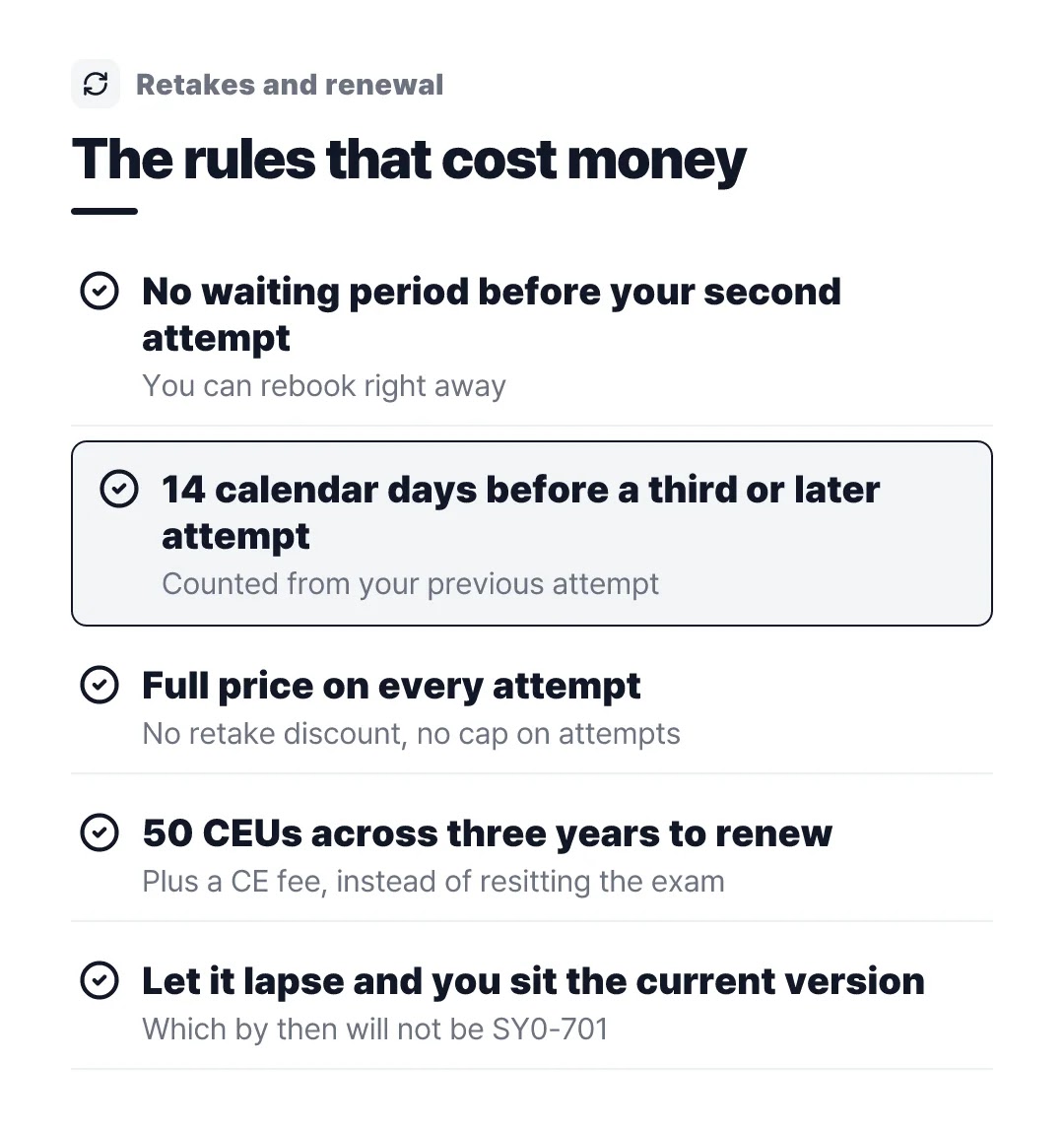
CompTIA's retake policy sets no waiting period between a first and second attempt. From the third attempt onward you must wait at least 14 calendar days from your previous attempt, there is no cap on total attempts, and you pay full price every time. A second failure therefore costs another voucher, not a fee.
Certification runs three years from your test date. Renewal is through CompTIA's Continuing Education program rather than resitting, and Security+ requires 50 continuing education units across that three-year window plus a CE fee. If the certification lapses, CompTIA's renewal policy states you must pass the current exam version to regain it — which by then will not be SY0-701.
How the 43-page cram sheet is organized
This is a condensed cram sheet, not a course replacement. It assumes you have already worked through the material once and want the recall layer in front of you in the final week. It covers all five domains, but at 43 pages it compresses rather than explains — if a concept is new to you, this is not where you learn it for the first time.
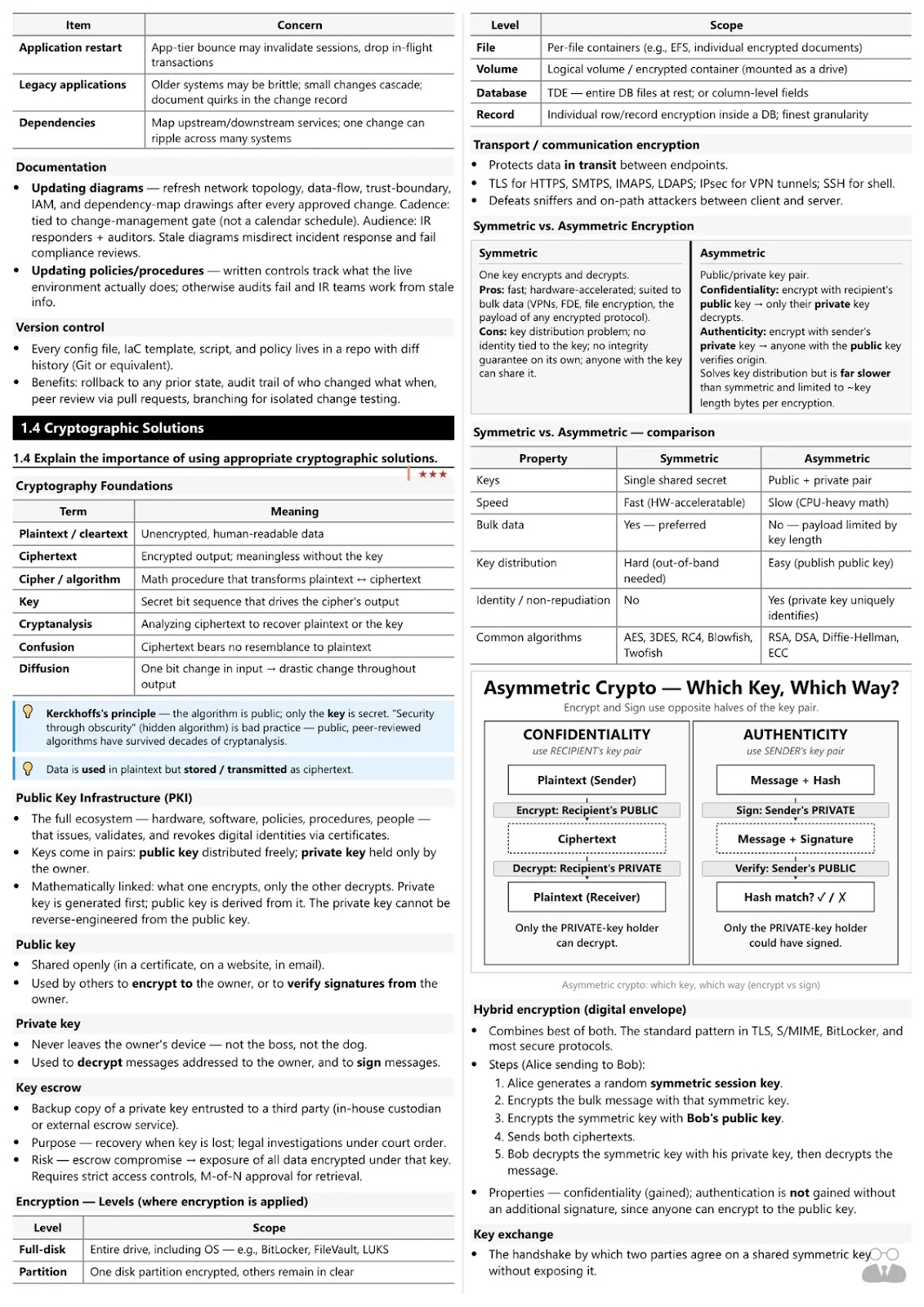
The structure follows CompTIA's own objective numbering. Sections are headed the way the blueprint heads them, down to the objective statement itself, so a page reads as "1.4 Explain the importance of using appropriate cryptographic solutions" rather than a generic chapter title. That makes it possible to work straight from the official objectives list and find the matching page.
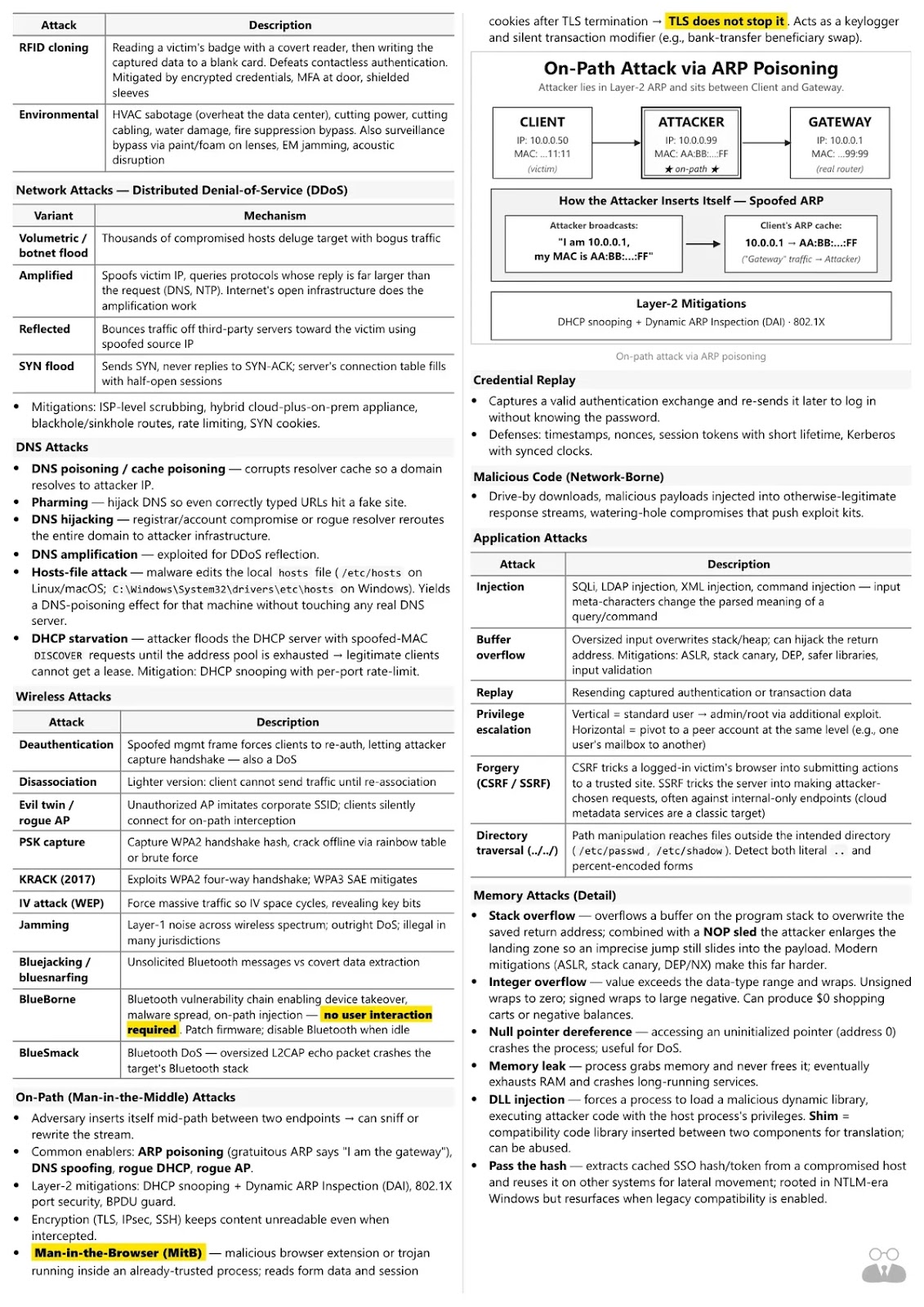
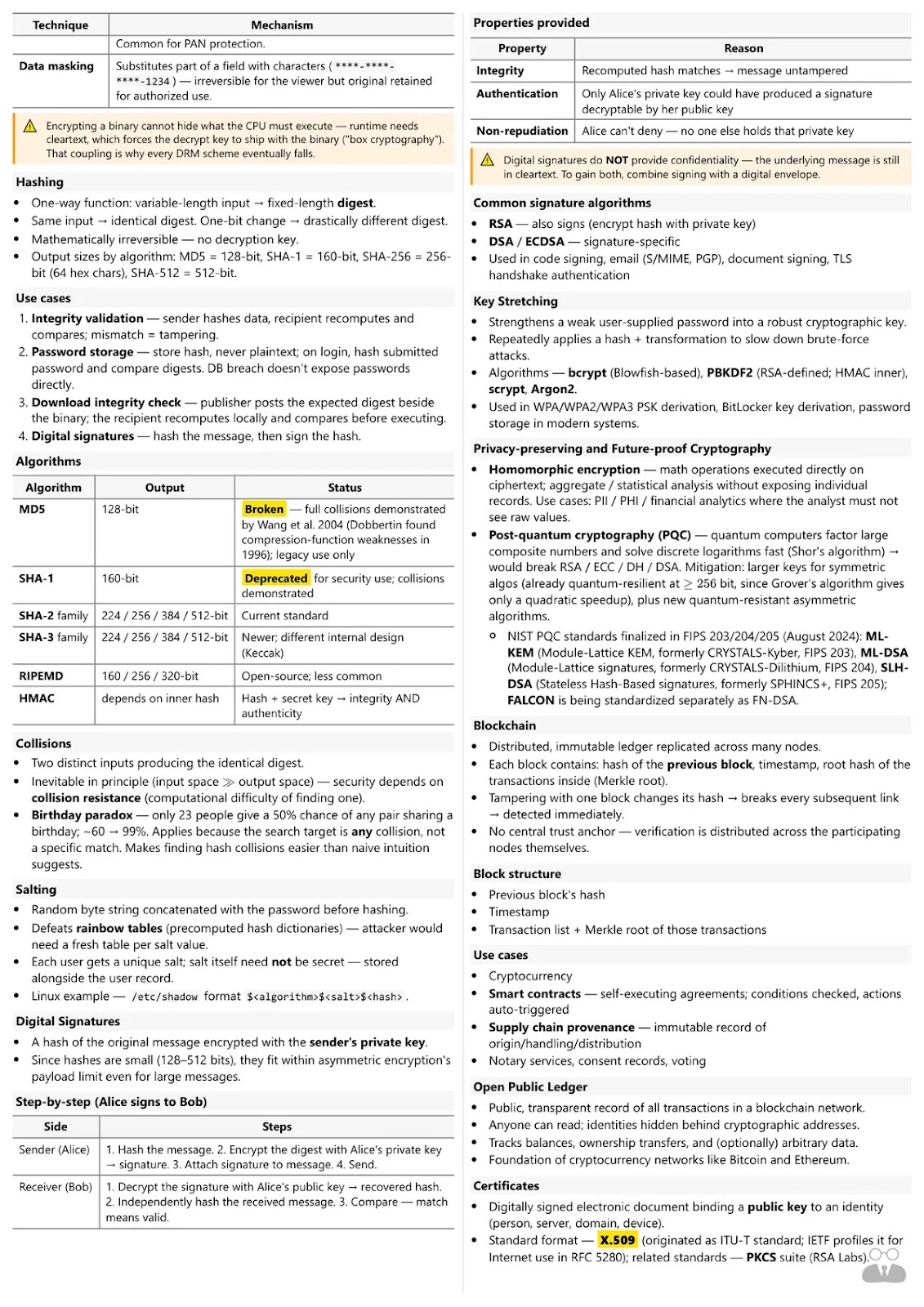
The public preview shows the density. Cryptography runs from the foundations table through PKI, key escrow, and a diagram that resolves the single most-missed exam distinction — which half of the key pair you use for confidentiality versus authenticity. Hashing carries the algorithm status table with MD5 marked broken and SHA-1 deprecated, and the post-quantum entry is current to the NIST FIPS 203, 204, and 205 standards finalized in August 2024, naming ML-KEM, ML-DSA, and SLH-DSA. The attacks pages separate look-alike pairs that the exam uses as distractors, including piggybacking with consent against tailgating without it, and an on-path ARP poisoning diagram with the Layer-2 mitigations attached. Frequency is marked with stars beside each objective heading.
👉 CompTIA Security+ SY0-701 study notes — PDF (43 pages)
https://www.crammist.com/library/comptia-security-plus-sy0-701-cheat-sheet

Common questions
Should I wait for the next Security+ version?
No. SY0-701 does not retire in English until June 11, 2027, and a certification earned on it stays valid three years from your test date. CompTIA has not published a launch date for the successor, so waiting means waiting on an unconfirmed schedule while your current study material goes stale.
What score do I need to pass?
750 on a 100 to 900 scale. That is not 83%, and CompTIA does not publish a raw question count that maps to it, because scoring is weighted and some items are unscored. Aim for consistent performance across all five domains rather than a target percentage.
How soon can I retake it if I fail?
Immediately, for a second attempt — CompTIA requires no waiting period between the first and second try. From the third attempt on, you wait at least 14 calendar days from the previous one. Each attempt costs a full voucher.
Bottom line
SY0-701 is the current Security+ exam and stays that way in English until June 11, 2027. The blueprint is lopsided: Security Operations takes 28% and Security Program Management another 20%, so nearly half the exam sits in two domains that many candidates schedule last. Retakes carry no discount, which makes the first attempt worth over-preparing for.
Pull CompTIA's official objectives list, map your study hours to the five weights above, and put governance material early rather than last.
📄 The SY0-701 blueprint, condensed to 43 pages
https://www.crammist.com/library/comptia-security-plus-sy0-701-cheat-sheet
Crammist is an independent publisher. These notes are unofficial study material and are not affiliated with, endorsed by, or sponsored by CompTIA. Exam dates, pricing, and policies come from CompTIA and can change — verify current details at comptia.org before you book.